
A 250 mm fitting is not adequately specified by its nominal diameter alone: outside diameter, wall thickness, pressure class, fluid, temperature, geometry, and jointing method all affect whether it will work. By the end, you will be able to match elbows, tees, reducers, couplers, and branch connections to actual operating loads, reject incomplete supplier proposals, and prepare a checkable purchase schedule for projects in Chhatrapati Sambhajinagar.
Key takeaways
- Confirm outside diameter, wall thickness, SDR, and pressure class before ordering.
- Choose fabricated fittings for complex layouts, not automatically for every connection.
- Check loads, bend radius, branch reinforcement, and joint compatibility before approval.
How to specify the diameter and pressure class before choosing a fitting
Confirm the pipe’s actual outside diameter, wall thickness, and pressure class—not nominal size alone—before selecting large diameter PVC fittings. A 250 mm pipe may follow different outside-diameter and SDR systems, so a “custom PVC fitting, 250 mm” description is not checkable.
A fitting fabricated from pressure-rated pipe is not automatically rated for the same pressure as the straight pipe.
Before fabricated PVC fitting selection, put these details in the purchase schedule:
- PVC or UPVC compound, applicable standard, nominal size, actual outside diameter, wall thickness, SDR, and pressure class
- Fluid, design pressure, surge pressure, operating temperature, and any temperature derating
- Fitting type, bend angle, centre-to-end dimensions, crotch geometry, and reinforcement arrangement
- Socket or spigot dimensions, flange drilling, and jointing system
- Burial depth, support condition, restraint arrangement, and transition to other materials
- Required hydrostatic test pressure, stabilization time, allowable pressure loss, and drawing approval before manufacture
| Specification check | What to confirm | Why it matters |
|---|---|---|
| Diameter | Nominal size and actual outside diameter | Prevents mismatched sockets and spigots |
| Pressure | SDR or class, design and surge pressure | Separates fitting rating from pipe rating |
| Temperature | Maximum fluid and exposed-pipe temperature | Higher temperature reduces pressure capacity |
| Testing | Hydrotest pressure and trapped-air controls | Prevents unsafe or misleading acceptance |
At bends, tees, reducers, and dead ends, specify thrust blocks or an approved restraint system separately; solvent-cemented joints do not make the fitting self-anchoring.
When fabrication is the right choice—and when another fitting is safer
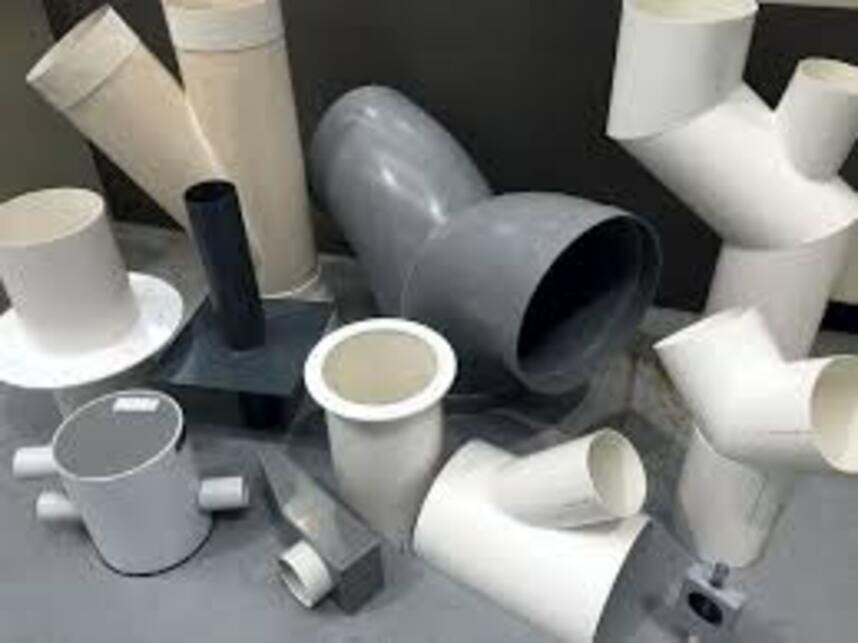
Choose fabricated PVC fittings for large diameter projects when the required geometry does not exist as a tested moulded product: an unusual bend angle, offset, large branch, reducer, or flange pattern. Custom PVC pipe fittings are also useful when centre-to-end dimensions must match an existing structure, provided the design is engineered rather than improvised.
| Option | Choose it when | Safer limit or warning |
|---|---|---|
| Fabricated fitting | The diameter, angle, branch, or drilling pattern is non-standard | A fitting made from pressure-rated pipe is not automatically rated for the pipe’s pressure; approve mitre layout, crotch reinforcement, joints, and hydrotest criteria |
| Moulded fitting | A standard size and geometry are available with documented pressure performance | Prefer it when its dimensions and rating meet the design; consistent manufacture reduces fabrication defects |
| Standard elbow | The route needs a listed 11.25°, 22.5°, 45°, or 90° change in direction | Do not force it into an offset layout or accept extra joints merely to avoid a designed fitting |
| Restrained coupling | You need a tested straight connection, repair point, or controlled axial restraint | It does not replace a bend, tee, or pressure-rated reducer and cannot correct poor alignment |
| Site-built alternative | Only for a temporary, engineered arrangement with approved materials and procedure | Reject it for buried, pressurised, or inaccessible service when joint quality and inspection cannot be demonstrated |
Require nominal size, actual outside diameter, SDR or pressure class, fluid, surge pressure, temperature, jointing method, dimensions, reinforcement, and drawing approval before manufacture. Use hydrostatic testing, not pneumatic testing, after supports and restraints are installed.
How to choose elbows, bends, tees, reducers, and branch connections for real loads
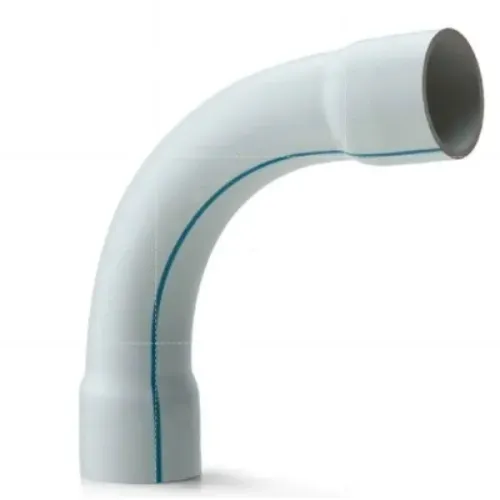
Use long-radius elbows, swept bends, reinforced tees, gradual reducers, and swept branch connections when flow losses and structural loads matter. A segmented or mitered bend needs enough segments to avoid an abrupt change in direction; fewer, sharper miters increase turbulence and local stress.
The fabrication drawing must show miter angles, crotch geometry, wall thickness, reinforcement, and centre-to-end dimensions.
For fabricated PVC fitting selection, specify these details before manufacture:
- Select elbows and bends by bend radius, not angle alone; provide extra support where the fitting is exposed or suspended.
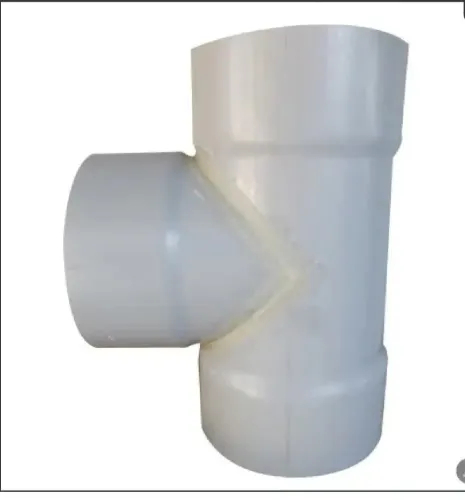
- Give tees a rounded crotch and a reinforced branch zone sized for pressure, branch flow, and external loads.
- Use concentric reducers where air pockets are harmless; use eccentric reducers to maintain drainage or prevent air accumulation in horizontal lines.
- Reinforce reducers, branch outlets, flange transitions, and changes in wall thickness because these features can govern failure.
- Calculate pressure thrust at every bend, tee, reducer, dead end, and material transition. Add an approved restraint system or designed thrust block; solvent cement does not make the fitting self-anchoring.
| Geometry | Suitable choice | Main control |
|---|---|---|
| Elbow | Long-radius, multi-miter | Lower hydraulic loss and stress |
| Bend | Swept fabricated curve | Large directional change with smoother flow |
| Tee | Rounded crotch with pad or increased wall | Branch thrust and pressure concentration |
| Reducer | Gradual taper with reinforced ends | Avoid separation and local collapse |
| Branch | Swept outlet or engineered saddle | Branch flow, shear, and support loads |
Rate the completed assembly at its weakest joint or feature, not by the connecting pipe’s pressure class. Include burial depth, supports, surge pressure, temperature derating, and the required hydrotest pressure in the design review.
What PVC, UPVC, jointing, and installation limits must control the design
Material grade sets the starting limit: PVC-U, often sold as UPVC, must match the pipe’s outside diameter, wall thickness, SDR, and pressure class. A fitting made from pressure-rated pipe does not automatically carry that pipe’s rating; require a separate design and test pressure for the fabricated assembly.
Control these conditions before approving custom PVC pipe fittings:
- Temperature: apply the manufacturer’s pressure derating above the reference temperature, including hot pump rooms, dark outdoor pipe, and summer installation conditions.
- Chemical service: check the exact chemical, concentration, temperature, and exposure time. Corrosion resistance does not prove compatibility with solvents, oils, or concentrated chemicals.
- Vacuum: demand an external-pressure or buckling check; ordinary positive-pressure ratings do not validate suction service.
- Burial: specify bedding, haunching, trench width, groundwater control, compaction, and construction loads. Poor sidefill or a rigid concrete surround can impose point loads on the fitting.
- UV exposure: require UV-stabilised material, shielding, or a compatible protective coating for exposed pipe; inspect coating damage before commissioning.
PVC-U is not heat-fused like polyethylene. Use solvent cement, flanges, elastomeric gaskets, or mechanical couplings; specify ASTM D2564 cement and ASTM D2855 jointing practice, including cure time. Test at the stated pressure after curing, with the test method and acceptance criteria documented.
For PVC fittings in Chhatrapati Sambhajinagar, Swapnil Enterprises can be asked to confirm these limits against the project’s Indian tender and BIS requirements, rather than accepting an ASTM-only description.
Related products
 | Fabricated PVC Fittings Fabricated PVC fittings are custom-shaped fittings, often for larger diameters, made by cutting, bonding, and thermoforming segments of existing PVC... View product → |
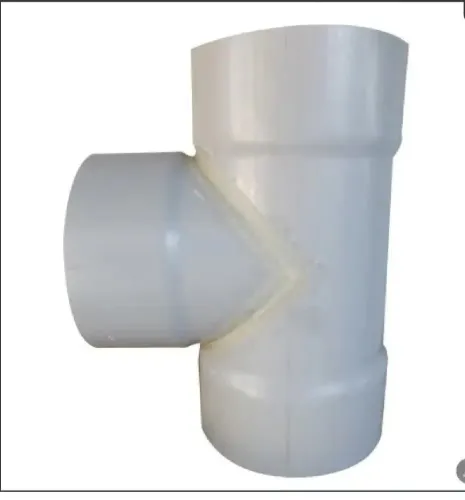
 | PVC FABRICATED TEE Our PVC Fabricated Tee is a high-quality, durable solution for various plumbing and construction needs. View product → |
Which documents should you demand before approving fabricated PVC fittings
Approve only when the supplier’s drawing, material evidence, calculations, and test records match the project specification. A standard mark on straight PVC pipe does not certify a non-standard fitting, and a fitting made from pressure-rated pipe is not automatically rated for that pipe’s full pressure.
Demand these documents for fabricated PVC fittings for large diameter projects:
- An approved fabrication drawing showing nominal size, actual outside diameter, wall thickness, SDR or pressure class, bend angle, centre-to-end dimensions, socket or spigot dimensions, flange drilling, miter count, miter angles, crotch geometry, and reinforcement.
- A material certificate identifying the PVC compound, applicable BIS or project standard, batch number, and manufacturer. For potable water, verify the applicable BIS requirements and conformity evidence before accepting PVC fittings in Chhatrapati Sambhajinagar.
- A design calculation covering design pressure, surge pressure, temperature, vacuum, fluid chemistry, hydraulic losses, thrust, and the proposed jointing method.
- A manufacturing inspection plan and hydrostatic test report stating test pressure, stabilization time, allowable pressure loss, trapped-air controls, and acceptance criteria.
- An installation drawing covering bedding, haunching, trench width, compaction, supports, groundwater, concrete encasement, and construction loads.
| Document | What it proves | Reject if |
|---|---|---|
| Approved drawing | Geometry and joint compatibility | Dimensions remain “to supplier standard” |
| Calculation | Pressure and load suitability | It rates the pipe, not the fitting |
| Hydrotest record | Fabrication integrity | Pneumatic testing replaces controlled hydrotesting |
| Installation review | Buried-service support | Sidefill or point-load risks are ignored |
Frequently asked questions
How should you specify a large diameter PVC fitting?
State the pipe’s actual outside diameter, wall thickness, SDR or pressure class, PVC type, connection method, fitting geometry, and operating conditions. Nominal diameter alone is not enough because a 250 mm pipe can follow different sizing systems.
When is a fabricated PVC fitting the right choice?
Use fabrication when the project needs a non-standard angle, outlet, reducer, or layout that standard moulded fittings cannot provide. Choose a standard fitting or another material when pressure surges, high structural loads, tight tolerances, or jointing risks exceed the fabricated design.
What should you check when selecting elbows, tees, reducers, and branch connections?
Check flow direction, bend radius, pressure class, thrust loads, branch reinforcement, reducer length, support spacing, and connection alignment. Size each fitting for the actual flow and external loads rather than matching diameter alone.
Which documents should you request before approving fabricated PVC fittings?
Request a dimensioned drawing, material and wall-thickness details, pressure-class or SDR information, jointing procedure, inspection records, batch or traceability details, and installation limits. Compare these documents with the pipe specification and project design.
Related products
 | PVC FABRICATED LONG ELBOW A PVC fabricated long elbow is a non-standard, custom-molded pipe fitting, often for large diameters, created by heating and bending PVC pipes rather... View product → |
 | Fabricated UPVC Fittings Fabricated UPVC fittings are custom-made, non-standard pipe connection components, often larger than 12 inches in diameter, constructed by joining... View product → |
 | PVC Fabricated Bend Pipe Our PVC Fabricated Bend Pipe is a high-quality, durable solution for various plumbing and construction needs. View product → |
 | PVC LONG BEND Our PVC Long Bend is a high-quality, durable solution for smoothly redirecting pipe flow over extended angles. View product → |