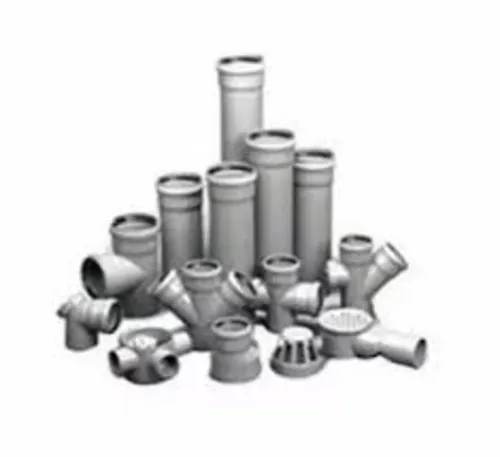

The choice depends on more than whether the pipe turns through 45 or 90 degrees. Compare radius, pressure loss, footprint, joining dimensions, fabrication risk, installation access, and service conditions before you release an order. By the end, you will have a specification checklist and a practical method for deciding between a standard long bend and a custom elbow for a Pune project.
Key takeaways
- Choose a long bend when angle, radius, ends, and pressure rating are already fixed.
- Use a custom elbow when tight space or unusual routing controls the design.
- Check centre-line dimensions, socket depth, and clearance before placing the order.
- Compare material, joining method, fabrication time, testing, and installation cost in your RFQ.
Choose by geometry, flow duty, and available space
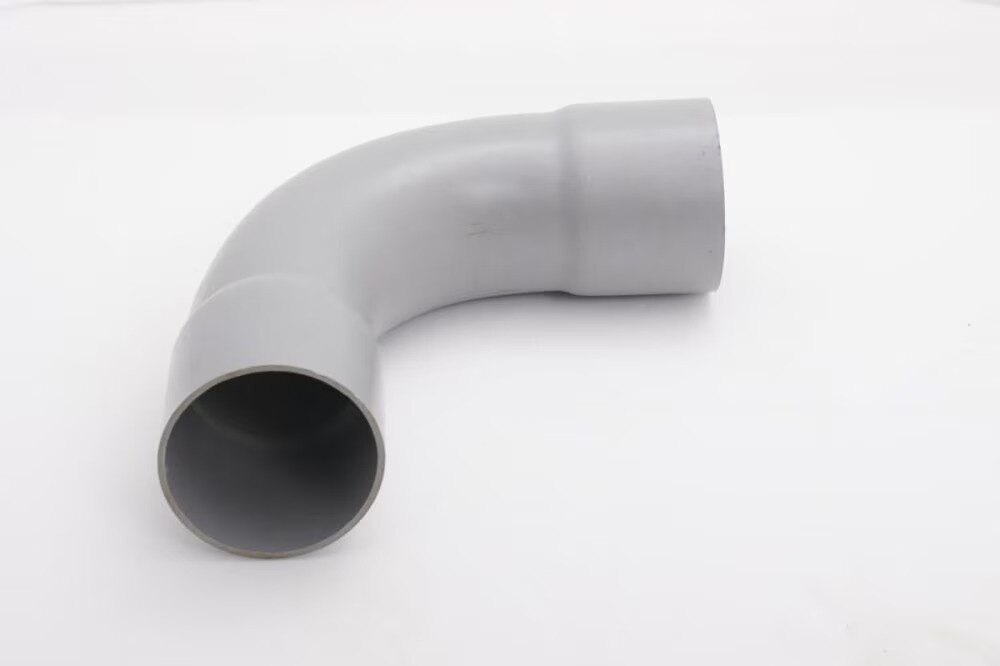
Start with the route, flow duty, and available space: a standard long bend is the better starting point when the angle, centre-line radius, socket or spigot ends, pressure designation, and installation method are already known. Its larger centre-line radius gives the drawing a predictable sweep.
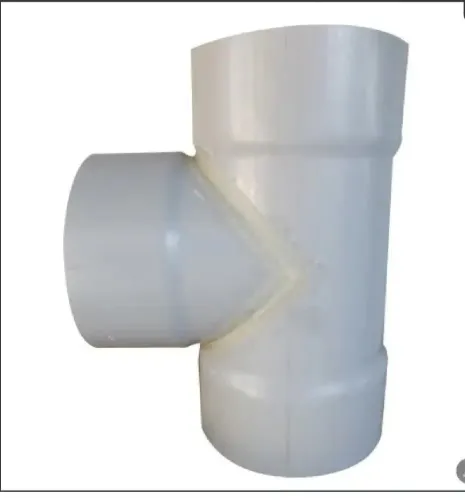
A custom elbow means a non-standard angle, radius, end arrangement, or dimensional layout. Choose it for a restricted rack or plant layout, equipment-nozzle alignment, large diameter, unusual centre-line radius, or a fabricated spool that must match an approved route.
PVC long bend or custom elbow in Pune should be selected against the actual service, not the fitting name alone. Compare the options this way:
| Option | Best starting point | Main advantage | Main trade-off |
|---|---|---|---|
| Standard long bend | Known angle, radius, ends, and installation method | Predictable drawing, repeatable availability, lower procurement risk | Needs space for its larger sweep |
| Custom elbow | Non-standard route, nozzle, radius, diameter, or spool match | Can shorten the route or remove several fittings | Adds fabrication, inspection, approval, and lead-time requirements |
For long bend versus custom elbow, check whether the route can accommodate the sweep and whether the flow duty benefits from smoother redirection. A custom shape that looks shorter on a plan can require segmented joints, extra supports, dimensional checks, and pressure testing.
Select the geometry that meets the route and service duty, then compare installed cost: fitting price, joints, supports, labour, inspection, delivery, rework, and commissioning risk. The lowest purchase price is not always the lowest project cost.
Compare radius, pressure loss, and process performance
A long bend does not automatically produce lower pressure loss than every custom elbow. The result depends on exact bend radius, included angle, internal bore, flow regime, surface condition, and the straight-pipe lengths beside the fitting.
| Feature | Smooth-radius long bend | Short-radius or custom elbow |
|---|---|---|
| Pressure loss | Usually lower local loss when correctly sized | Often higher local loss from abrupt redirection |
| Pump suction | Less turbulence supports available suction head | Extra turbulence reduces suction margin |
| Process line | Gentler redirection reduces mixing stress | Sharp turns can increase turbulence and shear |
| Space and cost | Needs a larger sweep | Uses less space but may require fabrication |
Specify the manufacturer’s loss coefficient or equivalent-length data for the exact geometry. Do not apply a generic elbow value to a PVC bend fitting comparison in Pune; two fittings with the same nominal diameter can impose different losses.
In pump suction, choose the smoother radius when space permits, then check the manufacturer’s data and available suction head. In chemical or process lines, abrupt redirection can disturb mixing, increase local shear, and create unstable flow near instruments or injection points.
Gravity drainage needs a separate check. Preserve the design slope, avoid high points that trap air, maintain solids carry-through, and provide rodding or jetting access. A larger radius can reduce sediment collection and air pockets when the route is correctly graded, but it cannot correct poor alignment or inadequate slope.
Review supports, anchors, and guides for all industrial pipe routing fittings in Pune. A pressurised change in direction creates thrust, while a larger sweep changes the load position and lever arm. The long bend versus custom elbow decision therefore includes restraint loads, not just centre-to-centre dimensions.
Check whether the fitting will physically fit before ordering
A fitting can match the drawing and still fail on site because its socket depth, sweep, or handling path was never checked. Use this field procedure for industrial pipe routing fittings in Pune:
- Obtain the fitting drawing and measure centre-to-end dimensions, tangent lengths, socket depth, outside diameter, and centre-line radius.
- Mark the pipe centreline and both tangent directions on the layout. Check alignment, available clearance, support and guide locations, equipment-nozzle access, tool access, replacement clearance, and the route needed to move the finished fitting into position.
- Confirm that full socket insertion will not push the pipe into a pump, valve, wall, or support. Include the insertion length in the face-to-face calculation.
- Check whether the fitting can be cleaned, flushed, rodded, removed, and replaced without dismantling unrelated equipment.
A custom elbow drawing must show bend angle, orientation marks, radius, tangent lengths, end type, tolerances, and socket or spigot dimensions. Without these details, two suppliers can produce different fittings under the same description.
Review thermal movement before approval. Locate anchors and guides from the actual bend geometry, because changing the radius changes load position and pipe movement. Check nozzle loads and access after the guides are installed.
For a PVC long bend or custom elbow in Pune, a standard long bend often wins when its dimensions and joining method are documented, even when a custom elbow appears shorter on plan. The shorter route is not cheaper if it cannot be installed, supported, cleaned, or replaced.
Specify the pressure boundary, material, and joining method
A complete RFQ for industrial pipe routing fittings in Pune must define the pressure boundary, not merely request a “PVC elbow.” Include:
1. Pipe outside diameter, nominal size, wall thickness or SDR, material grade or resin compound, service fluid, operating pressure, design temperature, bend angle, centre-line radius or radius-to-diameter ratio, socket or spigot dimensions, joining method, and installation orientation.
2. Reject any fitting whose pressure designation, wall series, compound, or temperature derating differs from the pipe. A visually compatible fitting can fail under pressure or hot service.
3. Name the reference standard. ASTM D2466 covers socket-type PVC fittings for Schedule 40 and Schedule 80 applications; ASTM D2467 covers socket-type PVC fittings for Schedule 80 applications. Neither reference automatically qualifies a locally fabricated custom elbow.
4. For a non-standard elbow, require a fabrication drawing, fabrication procedure, joint details, inspection points, batch traceability, and hydrostatic or other acceptance-test records. The drawing must show angle, radius, end dimensions, tolerances, and orientation marks.
5. For solvent cementing, clean and dry both surfaces, use the correct primer and cement system, insert the pipe fully, and follow the cement manufacturer’s cure time. Do not pressure-test early; an uncured joint can separate.
6. State outdoor UV exposure for Pune routing and apply temperature derating for hot fluids or heat tracing. A PVC bend fitting comparison in Pune is valid only when every supplier quotes the same service basis.
Build a Pune RFQ that compares total installed cost
Request two quotes against one approved drawing and service basis; otherwise a cheap fitting can conceal extra joints, supports, rework, or commissioning risk. For industrial pipe routing fittings in Pune, compare the following:
| Option | Commercial comparison | Best choice |
|---|---|---|
| Standard long bend | Check stock, delivery, documented dimensions, fewer joints, packaging, and lower site labour | A repeatable route with sufficient sweep space |
| Custom elbow | Add drawing approval, fabrication lead time, cutting or thermoforming, segmented joints, dimensional inspection, pressure testing, packaging, and installation labour | Standard dimensions cannot match the route, nozzle, diameter, radius, or spool |
A custom elbow made from cut and solvent-cemented pipe is not equivalent to a factory-moulded fitting. Joint quality, cut geometry, local wall condition, ovality, and reinforcement become part of the pressure boundary; require a fabrication procedure and test basis.
Ask every supplier to quote the same angle, radius, end dimensions, pressure, temperature, fluid, and installation method. For a PVC long bend or custom elbow in Pune, Swapnil Enterprises can assess a complete drawing and service data rather than an incomplete request for a “PVC elbow.”
Choose the standard long bend when its documented geometry is repeatable and the route has room. Choose the custom elbow when a standard fitting cannot achieve the required alignment.
- Confirm geometry, flow data, clearance, supports, and equipment access.
- State temperature, joining method, cure requirements, and test pressure.
- Compare lead time, packaging, site labour, rework allowance, and total installed cost.
- Record dimensional inspection, pressure-test documents, and commissioning responsibility.
Frequently asked questions
When should you choose a PVC long bend instead of a custom elbow?
Choose a standard long bend when the route angle, centre-line radius, socket or spigot ends, pressure designation, and joining method are already defined. Its predictable sweep simplifies layout and ordering.
How do radius and pressure loss affect PVC pipe routing?
A larger-radius bend creates a smoother change in direction than a tighter elbow, which can reduce turbulence and local pressure loss. Confirm the fitting geometry and pressure rating against the system’s flow duty.
What dimensions must you check before ordering a pipe fitting?
Check the centre-line radius, overall end-to-end dimensions, socket depth or spigot length, outside diameter, wall thickness, and clearance from nearby equipment, supports, and access paths.
What should a Pune industrial pipe-fitting RFQ specify?
State the pipe size, material grade, pressure boundary, angle, centre-line radius, socket or spigot ends, joining method, quantity, inspection documents, delivery location, and installation or testing requirements.