
A leaking coupler does not always mean the fitting itself is defective: joint preparation, pipe movement, incorrect pressure classification, and buried-line damage can produce similar symptoms. You will learn how to identify the actual failure, measure the replacement correctly, choose the right connection type, and specify a Pune supplier without relying on nominal size alone.
Key takeaways
- Keep pipe and socket surfaces dry before solvent welding.
- Check insertion depth, cement coverage, and socket fit before removal.
- Match replacement couplers to pipe outside diameter and pressure class.
- Ask suppliers for material grade, dimensions, batch details, and test documents.
What causes PVC coupler problems in Pune installations?
Most pvc coupler problems in pune begin with solvent-weld separation: wet or dirty surfaces, incomplete cement coverage, a loose socket fit, insufficient insertion, twisting after assembly, wrong or expired cement, or movement before curing. Monsoon moisture can stop solvent action; postpone the joint if you cannot keep the pipe and socket dry.
A pipe that is not square-cut, deburred, or chamfered as specified can scrape cement from the socket. The result is uneven insertion, voids, pipe pull-out, or a cracked socket. Exposed rooftop pipe adds another risk: UV can leave the surface chalky, brittle, and cracked, so a new coupler cannot restore the weakened pipe wall.
- Isolate the line, stop the pump, drain pressure, and expose the joint and surrounding soil. Look for socket splitting, circumferential separation, axial pull-out, and uneven insertion.
- Trace the wet point during a controlled pressurised test. A cracked pipe wets the pipe wall, a failed valve wets the valve body, and a leaking threaded adapter wets the threaded transition. Groundwater entering a buried line appears after isolation or excavation rather than only when pressure is applied.
- Check external loads. Water hammer, thermal movement, settlement, unsupported valve weight, misalignment, and poor trench backfill can pull a sound joint apart. Repeated failure at one location indicates a load or alignment problem, not a fitting defect.
- Correct the cause before replacing the coupler; another rigid socket will fail again if the pipe remains under movement.
How do you inspect a failed coupler before removing it?
Confirm the coupler is the failure point before cutting it out. This field sequence supports pvc coupler failure replacement in pune and prevents replacing a sound fitting while the pipe or support remains defective.
1. Isolate the line, shut the pump or supply, and drain all pressure. Open a downstream point to confirm the pipe is depressurised.
2. Expose enough pipe to view both socket edges and the surrounding soil. Clean and dry the joint, then check for a split socket, circumferential separation, axial pull-out, voids, cement gaps, pipe cracks, abrasion, and deformation.
3. Mark the pipe at the socket edge before disassembly. Check whether it reached the socket bottom; uneven insertion depth on opposite sides indicates angular entry or poor alignment.
4. After removal, inspect the pipe end for a square cut, burrs, a missing specified chamfer, ovality, and softened or scraped surfaces. For a solvent joint, check whether cement covered the full circumference and whether the joint moved during curing.
5. Record the fluid, operating pressure, temperature, installation date, cement product and expiry date, weather, and any water in the trench. Pune monsoon moisture can explain poor solvent action.
Do not apply more cement over a failed joint. Cut back to sound pipe, then correct the movement, misalignment, settlement, or support problem before installing the replacement.
How should you measure and classify the replacement?
Start with service, not the label “50 mm.” Classify the line before choosing a pvc coupler replacement in pune:
| Service | What to verify | Wrong choice risk |
|---|---|---|
| Pressure water | IS 4985 pipe OD, wall series, pressure class, socket dimensions | Leakage or pull-out under pressure |
| Irrigation | Operating pressure, burial conditions, joint type | Failure during pump cycles |
| Industrial chemical | Fluid concentration, temperature, gasket, cement, liner | Swelling, cracking, or chemical attack |
| Soil-waste-vent | IS 13592 uPVC drainage system and drainage-rated fitting | A non-pressure joint used incorrectly |
| Rainwater drainage | Gravity flow, seal type, UV and installation exposure | Leaks or poor drainage alignment |
For pressure-water work, compare the pipe and fitting’s nominal outside diameter, wall series, pressure class, and socket dimensions against IS 4985. For building drainage, use a fitting rated for the IS 13592 soil-and-waste system, not a pressure-pipe catalogue item.
A drainage or SWR coupler can match the outside diameter yet lack pressure, vacuum, or chemical-service approval.
Measure the actual pipe outside diameter, wall thickness or SDR, socket depth, and connection type. Specify whether you need a straight, reducing, threaded, flanged, or repair configuration. Record pressure, vacuum, temperature, fluid concentration, and the required gasket or cement.
PVC, uPVC, and CPVC are separate material systems. Keep pipe, fitting, cement, gasket, fluid, and temperature limits compatible; a CPVC joint requires its compatible pipe and cement system.
Which coupling type fits the repair and the site conditions?
A dry, aligned, compatible system with shutdown and curing time calls for a solvent-weld PVC or uPVC coupler. Select alternatives by the failure condition and site constraint.
| Option | Use it when | Checks before installation |
|---|---|---|
| Solvent-weld coupler | Pipe is dry, aligned, compatible, and isolated long enough to cure | Cement compatibility, socket fit, insertion depth, expiry, and cure time |
| Threaded adapter | The repair requires a threaded transition | Inspect thread form and sealing method; never force a solvent socket onto threads |
| Flanged repair | Equipment connection, dismantling, or a restrained joint is required | Specify bolts, gasket, pressure rating, and axial restraint |
| Rubber-ring coupler | The pipe has the designed groove or sealing geometry | Use compatible gasket compound, clean spigots, and specified lubricant |
| Compression or mechanical coupler | Draining, drying, or solvent curing is impractical | Confirm outside-diameter range, pressure rating, gasket material, restraint, and allowable movement |
Standard injection-moulded fittings become unsuitable for large diameters, unusual offsets, constrained alignment, custom angles, or non-standard layouts. A fabricated PVC or UPVC fitting can solve that geometry, but its design must match the fluid, pressure, temperature, joint method, and restraint requirements.
For a pvc coupler replacement in pune, do not substitute an SWR fitting for pressure water. An SWR fitting can match the outside diameter while lacking pressure, vacuum, or chemical-service rating. Classify the line before buying, then verify the fitting’s documented service rating.
What should you ask a PVC coupler supplier in Pune before buying?
Compare a PVC coupler supplier in Pune by records and measurements, not the lowest quotation. Send the supplier the failed sample, measured pipe outside diameter, clear photographs, service description, and required replacement configuration.
- Request the material designation, nominal size, applicable standard or test declaration, actual dimensions, socket-depth inspection data, pressure or drainage rating, and a written replacement policy.
- Confirm the operating temperature, fluid concentration, chemical-compatibility limits, batch number, and traceability record. For pressure-water work, ask how the fitting matches the pipe’s IS 4985 wall series, pressure class, and socket dimensions; for drainage, verify suitability for the IS 13592 system.
- Inspect the sample for short fill, flash, sink marks, ovality, cracks, and damaged sockets. Reject a part that has inconsistent socket depth even when its printed size is correct.
- Ask for the matching solvent cement or gasket specification, allowable curing time, surface and installation limits, and guidance for wet Pune monsoon conditions.
- For outdoor use, ask whether the fitting needs UV stabilisation, shielding, paint, or burial. For a non-standard layout, provide drawings or measurements before discussing a fabricated fitting.
| Evidence | Why it matters |
|---|---|
| Batch and traceability record | Links the fitting to production data |
| Dimensional inspection report | Confirms OD fit and socket consistency |
| Pressure, drainage, temperature, and chemical declaration | Matches the part to its service |
| Cement or gasket specification | Prevents an incompatible joint |
Swapnil Enterprises is relevant for a measured, customized PVC or UPVC fitting, but selection still depends on geometry, service classification, and documented performance.
Related product
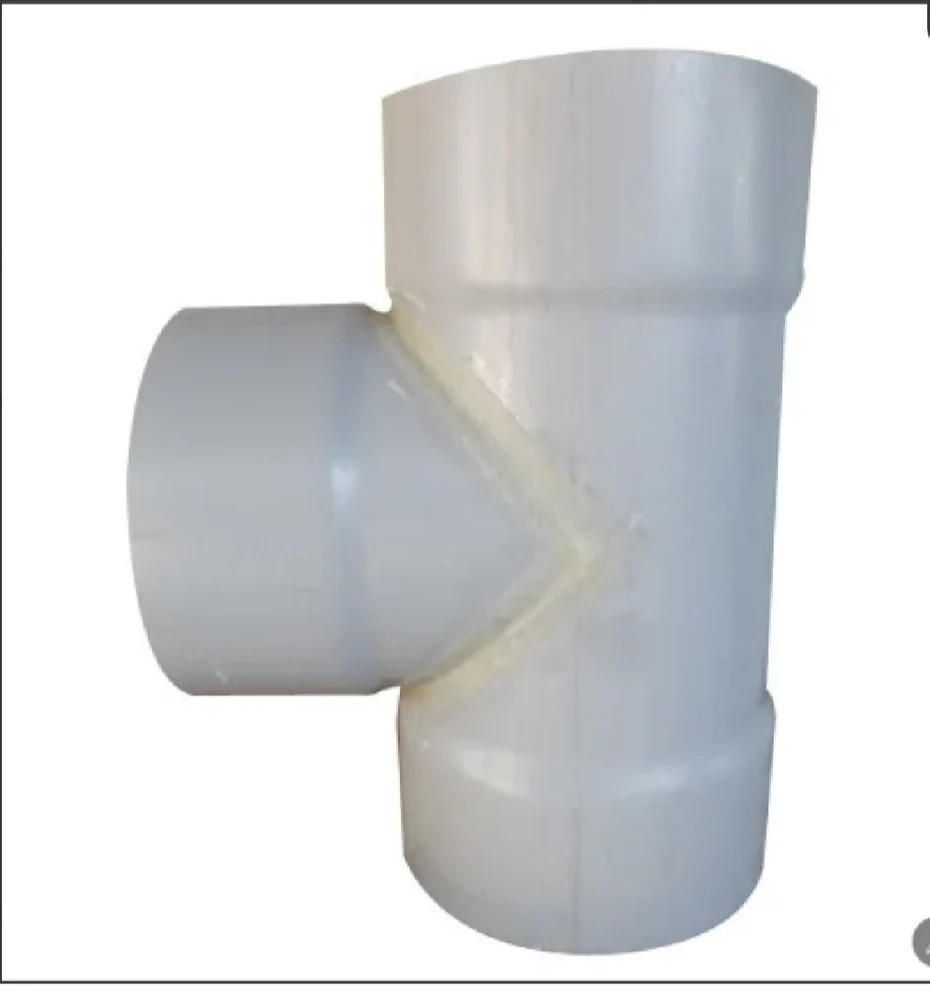 | PVC COUPLER Our PVC Coupler is a high-quality, durable solution for connecting two sections of pipe seamlessly. View product → |
Frequently asked questions
What causes PVC coupler problems in Pune installations?
Common causes include wet or dirty surfaces, incomplete cement coverage, loose socket fit, shallow insertion, twisting after assembly, incorrect or expired cement, and movement before curing. Monsoon moisture can prevent proper solvent action.
How do you inspect a failed PVC coupler before removing it?
Look for separation at the solvent-welded joint, gaps, cracking, whitening, deformation, water tracks, and signs of pipe movement. Check insertion depth and whether cement covers the full socket area before cutting out the fitting.
How should you measure and classify a PVC coupler replacement?
Measure the pipe outside diameter, socket depth, wall thickness, and available installation length. Confirm the nominal size, pressure rating, material type, connection standard, and whether the replacement is plain, reducing, threaded, or repair-style.
Which coupling type fits the repair and site conditions?
Use a standard solvent-weld coupler for a straight, accessible replacement with compatible PVC pipe. Choose a repair coupler or mechanical coupling when pipe movement, limited access, wet conditions, or a nonstandard connection makes solvent welding impractical.
What should you ask a PVC coupler supplier in Pune before buying?
Ask for exact dimensions, PVC or UPVC material grade, pressure class, compatible cement, batch number, manufacturing date, inspection records, and test documents. Confirm availability for the required size and project quantity.