
Quotations for fabricated UPVC fittings stall when a request leaves out the pipe’s actual dimensions, geometry, joining method, pressure duty, or delivery conditions. A controlled drawing, approval, inspection, and dispatch process lets you separate genuine fabrication time from avoidable quotation loops and site-fit failures.
Key takeaways
- Send pipe OD, wall thickness, dimensions, orientation, and joining method for a firm quote.
- Confirm stock, fabrication lead time, raw-material grade, and dispatch date before ordering.
- Check socket depth, flange drilling, pressure class, and centre-to-end dimensions against drawings.
- Require dimensional records, inspection details, packaging, and delivery documents before acceptance.
Which incomplete details delay the first quotation?
A nominal size or site photograph cannot produce a firm quotation for a fabricated fitting. The same DN or “4-inch” description can pair with different outside diameters, wall thicknesses, pipe series, socket depths, and pressure capabilities. A photograph also hides centre-to-end dimensions, branch orientation, flange drilling, and the joining method.
Send these details with the enquiry:
- Outside diameter, wall thickness, nominal size, pipe standard or SDR
- Bend angle, centre-to-face dimensions, branch direction, and a dimensioned drawing or spool reference
- Design pressure, surge allowance, required test pressure, temperature, and fluid
- Socket, spigot, flange, rubber-ring, solvent-cement, or other joint details
- Quantity, delivery location in Nagpur, required certificates, and approval deadline
Pressure-class confusion creates a costly approval loop. PN, working pressure, SDR, and a pipe standard are not interchangeable; nominal diameter alone cannot establish a fitting’s pressure rating. Raw pipe or sheet in stock also does not mean the finished fitting is ready, because cutting, forming, joining, inspection, and drawing approval consume separate time.
For problems buying fabricated UPVC fittings in Nagpur, compare the options before requesting custom work:
| Option | What it means | Faster choice when |
|---|---|---|
| Standard moulded fitting | Fixed geometry and established dimensions | A matching 45-degree bend, 90-degree elbow, tee, reducer, or flange adaptor meets the drawing |
| Fabricated fitting | Made to a specified geometry from pipe or sheet | No standard fitting matches the angle, dimensions, branch, or connection |
Use a moulded fitting when it fits the pipe series and duty; it usually avoids custom drawing approval and fabrication scheduling.
How do you verify UPVC fitting availability before placing an order?
Confirm finished-goods status, not just raw-material stock, before treating UPVC fitting availability as real. A supplier may have pipe or standard components on hand while the fabricated item still needs cutting, forming, joining, inspection, and transport.
1. Send one complete enquiry: outside diameter, wall thickness, nominal size, geometry, angle, centre-to-end dimensions, branch orientation, joint type, pressure or drainage duty, quantity, drawing reference, certificates, and Nagpur delivery location.
2. Ask which raw pipe, sheet, flanges, gaskets, or other components are available now. Request confirmation that the exact pipe series and wall thickness match your drawing.
3. Get a written production slot, not a verbal promise. Ask for the drawing-approval deadline, fabrication start date, first-article date, inspection date, and dispatch date.
4. Approve a dimensioned fabrication drawing before production. Check face-to-face length, branch direction, socket or flange details, and access clearance; a technically sound fitting with the wrong orientation still fails at installation.
5. Confirm the minimum order quantity and whether a trial piece attracts a separate charge. Ask whether the supplier will hold production until your written approval arrives.
6. Agree the inspection pack: material declaration, batch traceability, fabrication or welding details, dimensional report, pressure-test record, and inspection-and-test plan. Missing documents can stop dispatch after fabrication is complete.
7. Put ex-stock status, approved drawing revision, inspection release, dispatch date, packaging, vehicle type, unloading responsibility, and delivery restrictions at your Nagpur site in the purchase order. This sequence exposes the real lead time for fabricated UPVC fittings in Nagpur.
Which dimensional, pressure, and joining details prevent site-fit failure?
Confirm the actual pipe dimensions, not only the nominal diameter. A 100 mm pipe from one dimensional series may not enter a 100 mm socket from another, causing leaks or forcing unsafe site modification.
- Send outside diameter, wall thickness, pipe standard or series, socket depth, spigot length, diametral tolerance, angle, centre-to-end dimensions, and branch orientation.
- State pressure duty, design and surge pressure, required test pressure, operating temperature, and fluid. Nominal size alone does not establish pressure capability or chemical compatibility.
- Specify solvent cement type and curing requirement, or identify approved welding or thermoforming procedures. Do not assume cement for one UPVC compound suits another.
- For flanged joints, confirm flange drilling, bolt circle, face type, gasket material, gasket thickness, and bolt size. State the required expansion clearance around the fitting and supports.
| Option | Confirm | Site-fit consequence |
|---|---|---|
| Solvent cement | Pipe series, socket fit, cement grade, cure time | Poor fit or uncured cement can leak under pressure |
| Flanged joint | Drilling pattern, gasket, face alignment, bolt access | A mismatched flange stops assembly even when diameter matches |
| Thermoforming or welding | Procedure, heating limits, forming radius, inspection | Excess heat can distort the socket or weaken the wall |
For UPVC pipe project fittings, attach a dimensioned spool drawing with these details before approval. The same checklist prevents fabricated UPVC fittings in Nagpur from reaching site with the wrong branch direction, joint system, or movement allowance. If the fluid, temperature, or pressure changes, obtain a revised drawing rather than accepting a verbal substitution.
What inspection and delivery gaps hold up acceptance?
Acceptance stays on hold when the fitting arrives without a document trail or fails a simple physical check. The recurring problems buying fabricated upvc fittings in nagpur include treating raw pipe availability as finished-goods readiness and releasing a shipment before inspection records are complete.
| Hold point | Release evidence | Physical check | Delay if missing |
|---|---|---|---|
| Drawing approval | Signed revision of the dimensioned drawing or spool sketch | Verify branch direction, angle, face-to-face length, sockets and flanges | Wrong geometry requires rework |
| Material traceability | UPVC grade, pipe or sheet specification, batch number and supplier record | Match markings and wall thickness to the approved material | Source and compliance remain unverified |
| Fabrication record | Cutting, heating, welding or solvent-cement details, including operator or process record | Check neat joints, aligned axes and undamaged edges | Joint quality cannot be accepted |
| Final inspection | Dimensional report against drawing and signed inspection-and-test plan | Measure outside diameter, wall thickness, lengths and flange drilling | Site fit becomes uncertain |
| Test evidence | Pressure or leak-test record stating method, duration and result | Inspect for seepage, cracks and deformation | Dispatch approval stops |
Before dispatch, require change control: record every deviation, issue a revised drawing, and obtain written approval before fabrication continues. Ask for protective caps, branch supports and packaging that prevents sockets, flanges and mitred sections from carrying transport loads. On arrival, photograph the crate, check distortion and confirm the packing list before signing.
This sequence protects upvc fitting availability by separating raw-material stock, fabrication completion, inspection release and Nagpur delivery.
How should you compare fabricated fittings with other options and suppliers?
Choose fabricated UPVC only when its geometry, joint method, or delivery advantage outweighs extra fabrication controls. Compare every option against the same drawing, outside diameter, pressure or drainage duty, replacement availability, and total procurement effort; nominal size alone is not enough.
| Option | Best fit | Main limitation or check |
|---|---|---|
| Fabricated UPVC | Non-standard angles, branches, offsets, or large custom layouts | Verify welds, local thinning, ovality, tolerances, pressure testing, and lead time |
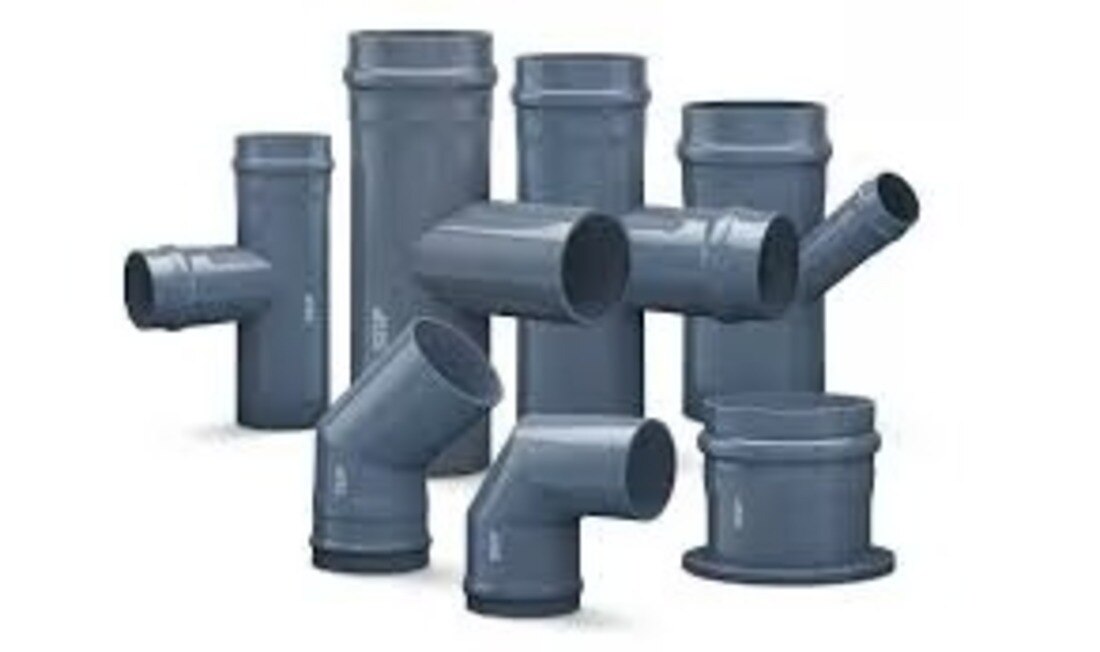
| Moulded UPVC | Standard 45° bends, 90° elbows, tees, reducers, and flange adaptors | Faster and repeatable, but unavailable geometry can force redesign |
| PVC | Compatible low-cost piping applications | Confirm the exact dimensional series; PVC and UPVC sockets are not automatically interchangeable |
| HDPE | Flexible runs, fusion-jointed networks, and ground movement | Requires qualified fusion work and different joining equipment |
| Rubber-ring drainage | Non-pressure SWR and drainage lines needing movement tolerance | Check ring groove, spigot dimensions, leakage testing, and replacement rings |
| Solvent-cement systems | Permanent, compact joints on compatible plastic piping | Cement, primer, preparation, curing time, and temperature affect installation |
Ask a custom UPVC fittings supplier in Nagpur to state these points in the quotation:
- Separate raw-material availability, fabrication start, inspection, dispatch, and Nagpur arrival dates.
- List construction limits, including maximum angle, pressure duty, temperature, and unavailable replacement parts.
- Assign responsibility for replacement after dimensional failure, transit damage, or a failed inspection.
- Confirm packaging, sunlight and heat protection, transport conditions, and the committed delivery date.
For UPVC pipe project fittings, Swapnil Enterprises can be compared on this same evidence rather than on availability claims alone.
Related products
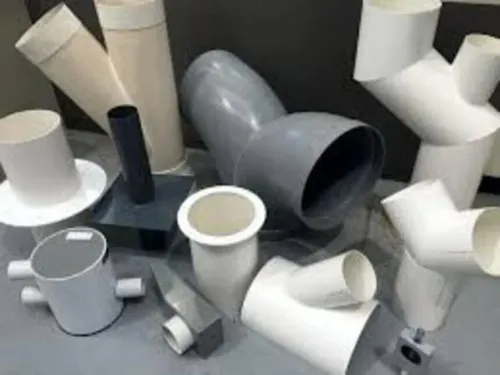
 | Fabricated UPVC Fittings Fabricated UPVC fittings are custom-made, non-standard pipe connection components, often larger than 12 inches in diameter, constructed by joining... View product → |
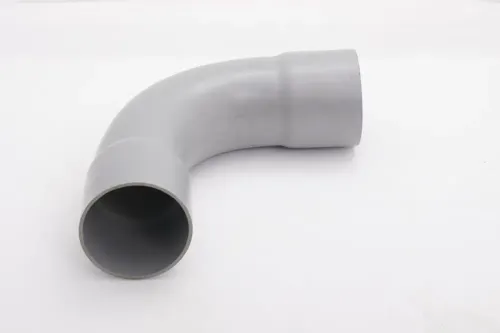
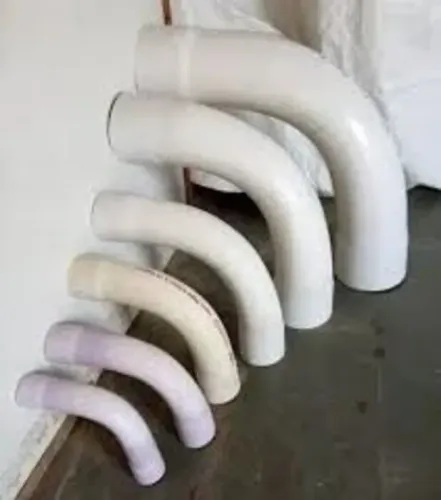
 | UPVC LONG BEND Our UPVC Long Bend is a premium, durable solution for smoothly redirecting pipe flow over extended angles. View product → |
Frequently asked questions
Which details are needed for a quotation for fabricated UPVC fittings?
Provide nominal size and actual outside diameter, wall thickness or pipe series, fitting dimensions, branch orientation, socket depth, pressure requirement, flange drilling, joining method, quantity, and delivery location.
How can you verify UPVC fitting availability before placing an order?
Ask the supplier to separate ready stock from made-to-order items and confirm raw-material availability, fabrication lead time, inspection timing, dispatch date, and the quantity reserved for your order.
Which checks prevent fabricated UPVC fittings from failing to fit on site?
Compare the approved drawing with outside diameter, wall thickness, centre-to-end dimensions, socket depth, branch angle, orientation, flange bolt-circle dimensions, pressure class, and solvent-welding or flanged joining requirements.
What inspection and delivery documents should you request?
Request dimensional inspection records, material or batch identification, pressure or test records when specified, quantity confirmation, packing details, delivery challan, and visible protection against impact and distortion.
How should you compare fabricated fittings with standard fittings or other suppliers?
Compare total installed cost, lead time, dimensional compliance, pressure capability, joining compatibility, inspection evidence, packaging, replacement risk, and supplier capacity rather than comparing unit price alone.