
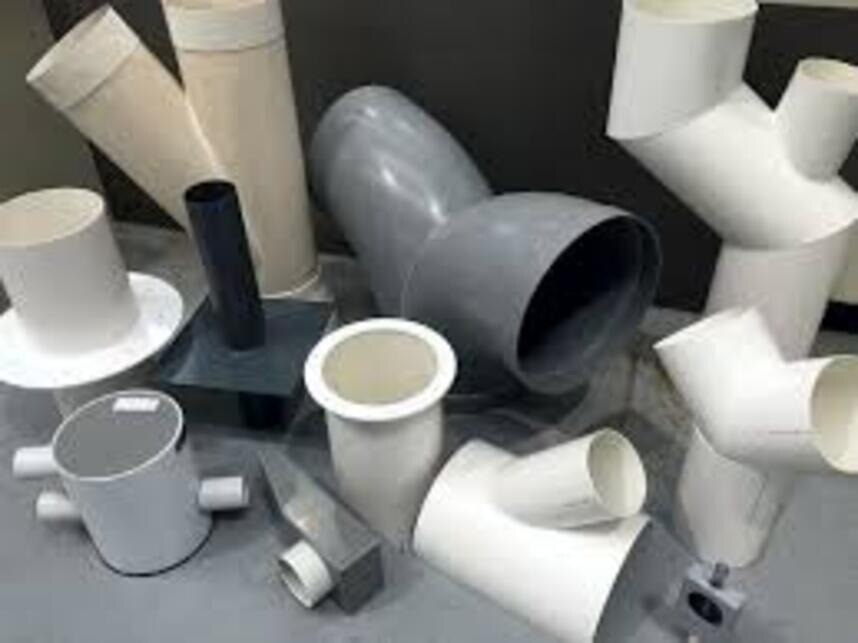
A fabricated PVC fitting can solve an offset, branch, bypass or equipment connection that no standard fitting matches, but it also adds joints and workmanship risks. By checking service conditions, geometry, joint quality, testing and total installed cost, you can decide where fabrication is justified and where a moulded, HDPE or factory-qualified alternative is safer.
Key takeaways
- Use fabricated PVC for drainage, stormwater, ventilation, and low-pressure connections.
- Reject it for critical pressure mains without documented pressure design and testing.
- Verify geometry, loads, chemical compatibility, jointing, curing, and test records.
- Compare suppliers by installed failure risk, not the fitting’s unit price.
Start with the service: pressure main, drainage line or process connection
A fabricated PVC fitting is most appropriate for gravity drainage, stormwater, ventilation, or a low-pressure process connection—not automatically for a critical, continuously pressurised transmission main. In Pune, use it when an offset, bypass, branch, sump connection, manhole, or equipment tie-in has geometry that standard injection-moulded fittings cannot provide.
- Define the service. Confirm whether the fitting carries gravity flow, intermittent pressure, or continuous pressure. A buried pressure main usually needs a standard moulded fitting or a factory-qualified fabricated assembly because approval, replacement, testing, and insurance are simpler.
- Confirm why fabrication is necessary. Large diameters, unusual angles, restricted access, or a connection to existing infrastructure can justify custom PVC fittings for infrastructure in Pune. A custom part is not a like-for-like substitute for an ASTM D2466 moulded pressure fitting.
- Check the loads beyond internal pressure. Poor bedding, uneven backfill, traffic surcharge, differential settlement, surge pressure, and unsupported branches can bend the fitting or peel its joints after a successful workshop test.
- Define exposure and fluid conditions. State operating temperature, chemical contents, burial depth, and repair access. For outdoor installations, specify UV stabilisation or a protective coating and its maintenance interval.
Choose a supplier experienced in custom PVC fittings infrastructure in Pune only after the service, geometry, and installation loads are documented. Require a first-off assembly, material certificates, batch identification, dimensional inspection, visual joint checks, and a documented pressure or leakage test before dispatch.
Match the fitting to the project context and competing options
Choose fabricated PVC where the geometry is genuinely non-standard—an offset, branch assembly, manhole connection, sump outlet or equipment tie-in—and a standard fitting cannot meet the layout. For pvc fabricated fittings for contractors, compare total installed cost and outage risk, not the purchase price alone.
| Option | Main advantage | When it applies |
|---|---|---|
| Fabricated PVC | Custom angles, offsets and large-diameter assemblies without improvised field joints | Gravity drainage, stormwater, ventilation and low-pressure process lines with unusual geometry |
| Moulded PVC or UPVC | Consistent dimensions, recognised pressure ratings and easier replacement | Standard pressure mains, repetitive layouts and critical continuously pressurised service |
| Rubber-ring fitting | Faster assembly and movement tolerance without solvent welding | Buried drainage or pressure pipelines designed for flexible gasketed joints |
| HDPE fitting | Fusion-welded continuity and strong tolerance of settlement | Ground movement, surge exposure or services where HDPE is already the specified pipe system |
| Site-built alternative | Immediate modification using cuts, adapters or welded sections | Temporary work or accessible, low-consequence repairs; avoid it for buried permanent assemblies |
A fabricated assembly becomes harder to justify when its drawing, replacement route or pressure test is unclear. Sun-exposed Pune installations also need a specified UV-stabilisation or coating system.
Compare these installed consequences before approval:
- Field cutting and extra joints
- Fabrication lead time and special packing
- Access for repair and availability of a replacement
- Pressure, leakage and inspection requirements
- Traffic loading, burial depth and expected soil movement
Check geometry, loads and material compatibility before approval
Approval depends on more than the fitting’s internal pressure rating. Confirm its geometry, installation loads, joint construction, temperature range and fluid chemistry against the actual Pune site conditions; a shop-tested fitting can still fail after settlement, traffic loading or poor pipe support.
Record these details before fabrication:
- Pipe outside diameter, wall thickness, SDR or schedule, branch angle, centreline offsets, insertion depth and available repair clearance.
- Design pressure, surge pressure, operating temperature, burial depth, bedding class, backfill quality and traffic surcharge.
- Fluid name, concentration, temperature and exposure duration; check the chemical schedule, not just a “PVC” label.
- Solvent-weld or fabricated-joint method, reinforcement details, cure time, hydrostatic test pressure and test duration.
- Material certificates, batch identification, a first-off assembly, dimensional inspection and visual inspection of every joint.
| Check | What to verify | Reject when |
|---|---|---|
| Geometry | Branch alignment, wall thickness, access and support points | The assembly needs forced alignment or leaves a joint unsupported |
| Loads | Pressure, surge, settlement, bending and peeling forces | The design considers pressure but not trench or traffic loads |
| Chemistry | Concentration, temperature, exposure time and stress | Compatibility is claimed from the PVC name alone |
| Evidence | Test record, dimensions, traceability and joint inspection | Only a visual sign-off is supplied |
ASTM D2466 applies to specified moulded fittings; it does not automatically qualify a custom fabrication. These checks expose fabricated pvc pipe fitting issues before dispatch, not after a buried joint fails.
Control jointing, curing and testing at the workshop and trench
One extra solvent-welded joint adds another leak path. Prevent fabricated pvc fittings project problems by controlling surface preparation, insertion and cure at every joint, not by relying on the source pipe’s pressure rating.
- Approve a shop drawing showing socket depth, bore continuity, branch angle, face squareness, flange alignment, tolerances, mitres and reinforcement.
- Record pipe and fitting material, cement type, batch number and joint sequence; reject wet, greasy, muddy or poorly deburred surfaces.
- Make a first-off assembly or sample, then inspect every joint visually for full insertion, even cement coverage, gaps, cracks and distortion.
- Keep assembled fittings supported and still for the cement manufacturer’s stated cure period. Protect them from rain, standing water and wet trench walls during Pune’s monsoon.
- Inspect dimensions before dispatch, because fabricated pvc pipe fitting issues can prevent valve, flange or pipe alignment even when the joints look sound.
In the trench, verify bedding, side support, cover and backfill compaction before connecting the fitting. Uneven bedding, traffic surcharge or differential settlement can bend a branch and peel a joint apart after a satisfactory workshop test.
Test pressure fittings with a documented hydrostatic procedure stating test pressure, duration, temperature basis and acceptance limit. For buried drainage, use the project-specified leakage or water test rather than visual sign-off. Record the result, test section and gauge identification; the pipe’s rating does not automatically rate the fabricated fitting.
Buy against installed risk, not the fitting’s unit price
A low quotation is not a low-cost installation if it creates field cutting, delayed commissioning, special packing, or an unreplaceable one-off. Compare PVC fabricated fittings for contractors by total installed cost, outage exposure, and the consequence of failure.
1. Require a dimensioned drawing showing diameter, angles, branch locations, wall thickness, joint construction, reinforcement, and connection details. Confirm that the design suits the actual pipe SDR or schedule; never transfer the source pipe’s pressure rating to the fitting automatically.
2. Require a design statement covering internal pressure, surge pressure, operating temperature, fluid chemistry, burial depth, bedding, backfill, traffic surcharge, pipe support, and differential settlement. For custom PVC fittings infrastructure in Pune projects, installation loads can peel joints or bend a branch after a successful workshop pressure test.
3. Require material certificates, batch identification, a first-off or sample assembly, dimensional records, and visual inspection records for every joint. Specify the hydrostatic pressure or leakage test, duration, acceptance limit, and test standard before fabrication; coordinate drainage tests with the project specification.
4. For exposed installations, specify the UV stabilisation or protective-coating system and its inspection and maintenance interval. Ask how the coating will be repaired without hiding cracks or joint defects.
Before commissioning, obtain installation instructions, lifting limits, approved drawings, test results, and a replacement plan. Swapnil Enterprises, for example, should be evaluated against this evidence rather than catalogue claims, especially where a moulded pressure fitting remains available.
Related products
 | Fabricated PVC Fittings Fabricated PVC fittings are custom-shaped fittings, often for larger diameters, made by cutting, bonding, and thermoforming segments of existing PVC... View product → |
 | Fabricated UPVC Fittings Fabricated UPVC fittings are custom-made, non-standard pipe connection components, often larger than 12 inches in diameter, constructed by joining... View product → |
Frequently asked questions
Which infrastructure applications suit fabricated PVC fittings in Pune?
They suit gravity drainage, stormwater, ventilation, low-pressure process connections, offsets, bypasses, branches, sump connections, manholes, and equipment tie-ins where standard fittings cannot match the geometry.
Are fabricated PVC fittings suitable for continuously pressurised transmission mains?
Not automatically. Approve them only after checking pressure design, reinforcement, joint details, material compatibility, and documented pressure testing for the specific service.
What should contractors check before approving a fabricated PVC fitting?
Check the drawing and dimensions, bend radius, wall thickness, support and thrust loads, temperature, chemicals, connection method, curing requirements, and workshop quality records.
How should buyers compare fabricated PVC fitting suppliers?
Compare the complete installed risk: fit-up, joint reliability, inspection records, testing, delivery coordination, rework, excavation exposure, leakage, and downtime—not only the unit price.
Related products
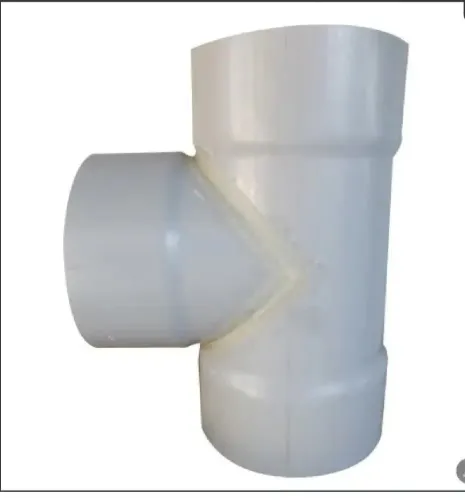
 | PVC FABRICATED TEE Our PVC Fabricated Tee is a high-quality, durable solution for various plumbing and construction needs. View product → |
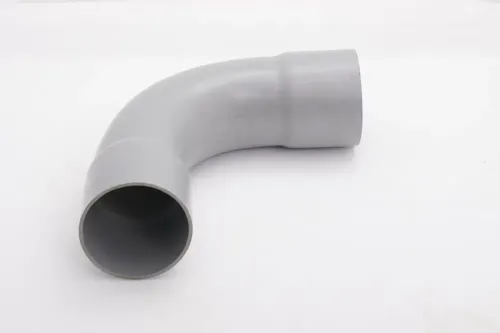
 | PVC Fabricated Bend Pipe Our PVC Fabricated Bend Pipe is a high-quality, durable solution for various plumbing and construction needs. View product → |
 | Fabricated SWR Fittings Fabricated SWR (Soil, Waste, Rainwater) fittings are plumbing components, typically made from unplasticized polyvinyl chloride (uPVC), used in... View product → |
 | PVC FABRICATED LONG ELBOW A PVC fabricated long elbow is a non-standard, custom-molded pipe fitting, often for large diameters, created by heating and bending PVC pipes rather... View product → |