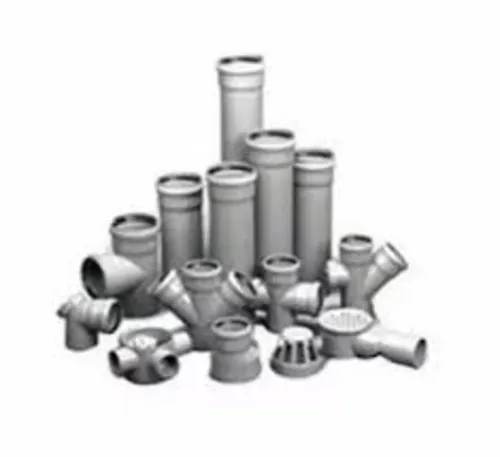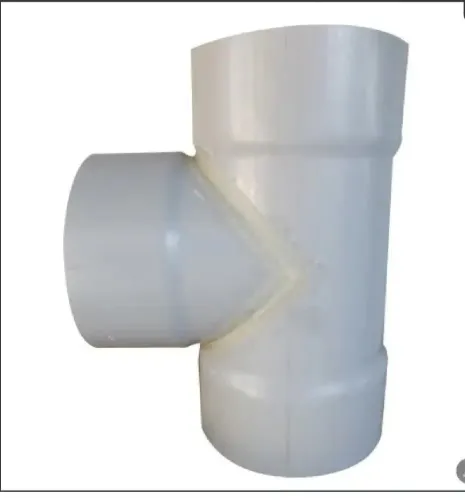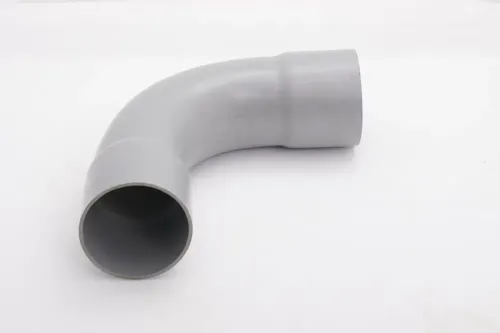

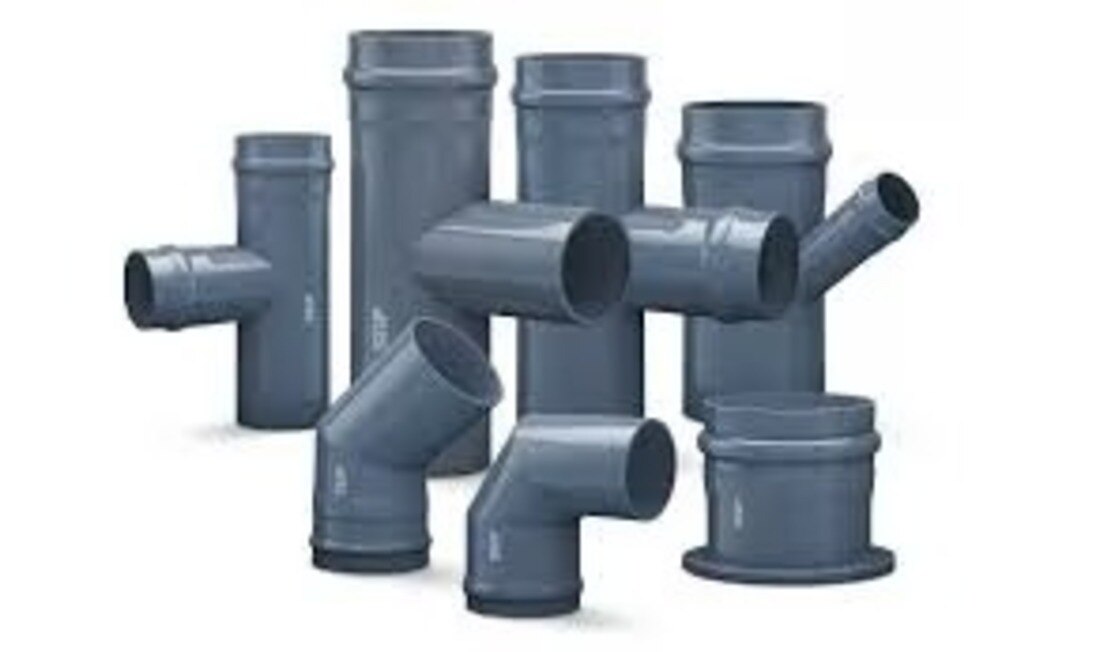
Leaks, cracked mitre joints, distorted sockets and pressure seepage do not always mean the same repair is needed. You will be able to trace the failure to the fitting, pipe, joint or support system, decide whether to repair or replace it, and compare fabrication with moulded and alternative-material solutions.
Key takeaways
- Separate fabricated assemblies from pressure-rated moulded fittings before approving repairs.
- Pressure-test the pipe, fitting, and joint separately to identify the failed component.
- Replace fittings with body cracks, distortion, or failed bonded seams.
- Give dimensions, pressure, temperature, fluid, and drawings to your supplier.
How to diagnose UPVC fabricated fitting problems in Pune
A wet ring at one joint points to sealing or bonding failure, while a crack through the fitting body points to structural failure. For upvc fabricated fitting problems in pune, start by separating a shop-fabricated assembly from a pressure-rated, injection-moulded fitting: straight pipe pressure rating does not automatically rate a fabricated branch, reducer or bend.
1. Check where moisture appears. Seepage at the socket edge indicates incorrect insertion depth, contaminated or wet surfaces, incompatible solvent cement, expired cement or inadequate curing. Leakage from a flange face points to a damaged gasket, uneven tightening or misalignment.
2. Inspect the body under good light. A longitudinal crack, white stress marks, blistering, or layers lifting at a fabricated seam indicates cracking or delamination; do not patch it for pressure service. A bulged or oval socket suggests excessive assembly force, heat distortion or unsupported pipe loading.
3. Look for movement and alignment clues. A joint that leaks after temperature changes can be carrying thermal expansion because supports are too far apart or the pipe was forced into position. A branch pulling sideways, a tilted flange, or uneven gaps around a gasket indicates poor alignment rather than an isolated fitting defect.
4. Check dimensions before blaming the fitting. Measure outside diameter, wall thickness, socket depth and spigot length; a nominal 110 mm designation is insufficient when pressure and drainage dimensional series differ.
Record photographs, pressure conditions and the fitting’s location. Darkened or chalky surfaces on an exposed rooftop also flag ultraviolet degradation, which a shaded-service fitting was not designed to withstand.
How to prove whether the fitting, pipe or joint is at fault
A pressure test alone does not identify the failed component; isolate the assembly, inspect each interface, and compare dimensions before testing. For upvc fabricated fitting problems in pune, record the fitting’s material, wall thickness, branch geometry, welds or solvent-cement seams, and stated test pressure.
Do not assume the straight pipe’s pressure rating applies to a fabricated tee or reducer.
- Check the fitting body for cracks, delamination, bulges, uneven heating marks, distorted sockets, and impact damage.
- Measure outside diameter, wall thickness, socket depth, spigot length, and insertion depth against the nominated pipe and fitting standard. “110 mm” alone is not enough because pressure and drainage series differ.
- Inspect solvent-cement joints for wet or muddy surfaces, gaps, incomplete insertion, incompatible cement, and curing time shorter than the product instruction.
- Check flanges and gaskets for uneven bolt tightening, incorrect gasket size, face damage, and pipe strain.
- Sight the run and inspect every hanger, saddle, anchor, and guide. An unsupported large-diameter pipe or forced alignment can load an intact fitting until it leaks.
- Retest after isolating the fitting and connected pipe sections. Keep clean, dry surfaces and matching temperatures during any renewed joint.
| Fault location | Evidence | Confirming inspection |
|---|---|---|
| Fitting body | Crack, bulge, or delamination away from joints | Remove and examine the cut section; do not patch pressure-bearing damage |
| Joint | Seepage at socket, flange, or gasket line | Check insertion depth, cure, contamination, faces, bolts, and gasket |
| Pipe or support | Crack near a hanger or persistent misalignment | Release supports, realign without force, and inspect the pipe end |
| Thermal movement | Leak returns after temperature change | Check anchors, guides, expansion allowance, and exposed UPVC UV protection |
When to repair and how to plan a UPVC fitting replacement
Renew a gasket or detachable joint when the fitting body is intact, flange faces are flat, and the leak remains at the seal after alignment and bolt checks. Cut out one fitting when damage is confined to that component and both connected pipe ends have sound, round surfaces with enough length for new sockets.
Replace an adjoining pipe section when it is cracked, softened, deformed, chemically attacked, or too short to provide the specified insertion depth.
- Isolate, drain and depressurise the line. Mark the leak, support the pipe, and confirm whether movement or load is pulling on the joint.
- Remove the gasket and inspect its groove, flange faces and bolt holes. Fit a compatible replacement only if the faces are undamaged; remake a solvent-cement joint instead of trying to seal over a failed bond.
- Measure the exposed pipe outside diameter, wall thickness, socket depth and available cut length. Reject a single-fitting replacement if either pipe end is oval, split, contaminated or too short for full insertion.
- Before assembly, verify face-to-face dimensions, branch orientation, support points, pressure class, service temperature and chemical exposure. Pressure-test after the specified cure time.
For UPVC fabricated fitting replacement in Pune, match the actual pipe series rather than relying on a nominal “110 mm” label. A moulded elbow, tee or reducer improves repeatability, but use it only when its geometry preserves alignment, valve clearance and supports; otherwise specify a fabricated repair spool with documented jointing and inspection requirements.
When fabrication is the wrong project choice
Choose an injection-moulded fitting when the design is a repeated standard elbow, tee, reducer or coupler. Its geometry and wall distribution are more consistent than a one-off assembly, but confirm that its outside diameter, wall series, socket depth, face-to-face length and pressure class match the existing system.
| Option | Better choice when | Main caution |
|---|---|---|
| Injection-moulded fitting | You need repeated standard geometry or a pressure-rated catalogue part | It may alter alignment, valve clearance or support locations |
| Standard spool | The replacement follows a known straight length or routine assembly | Measure face-to-face dimensions and joint ends before ordering |
| Long-radius fitting | The line carries cyclic pressure, vibration or thermal movement | Check bend radius, available space and support spacing |
| Another pipe material | UPVC cannot tolerate the service temperature, chemicals, pressure or impact exposure | Verify chemical compatibility, joining method and flange or gasket materials |
Do not select fabrication solely because its piece price is lower. A fabricated fitting does not automatically inherit the pressure rating of its source pipe; mitre joints, branch reinforcement, solvent-cement work and inspection determine the assembly’s capacity.
Keep fabrication for large diameters, unusual angles, low-volume manifolds, repair spools and dimensions unavailable in moulded ranges. Reject a proposed replacement if it forces misalignment, reduces access for maintenance or leaves existing supports carrying the wrong load.
A long-radius moulded elbow is the safer choice than a segmented elbow where mitre-joint stress could turn vibration or thermal movement into cracking.
What to give a custom UPVC fitting supplier before manufacture
A verbal “custom 6-inch tee” is not a manufacturing specification. Give a custom UPVC fitting supplier in Pune the existing pipe’s actual outside diameter, wall thickness, pressure class, dimensional series, socket depth, spigot length, face-to-face length, branch angle, and available installation clearance.
Send these items before fabrication:
- A dimensioned drawing showing centre-to-end measurements, angle, branch orientation, wall thickness, socket or flange details, tolerances, material designation, jointing method, support locations, test pressure, and allowable service temperature.
- Service information covering operating pressure, pressure surges, fluid, chemical exposure, flow direction, buried or exposed installation, sunlight, and Pune monsoon conditions.
- Site photographs and measurements showing valve clearance, access for assembly, pipe alignment, anchor points, thermal-movement gaps, and the sections that will be cut out.
- The nominated pipe and joining-product details, including PVC-U solvent-cement compatibility, cement batch and expiry date, storage temperature, and required curing time.
Swapnil Enterprises should receive the same information when preparing a replacement, rather than relying on a nominal diameter.
| Check | Evidence to request | Failure prevented |
|---|---|---|
| Drawing review | Signed dimensions and orientation | Misalignment or impossible installation |
| Material review | Pipe standard, pressure class and chemical limits | Dimensional or service mismatch |
| Factory acceptance | Visual inspection, dimensional report and pressure test at the specified pressure | Cracks, leaks or distorted sockets |
| Site acceptance | Clean dry joints, insertion marks, cure record and leak test | Early joint failure |
For rooftop or exposed plant areas, record whether UV-stabilized material, shielding, or compatible protective coating is required. Cap and support components during transport; reject fittings with impact marks, contamination, delamination, or visible cracks.
Related products
 | Fabricated UPVC Fittings Fabricated UPVC fittings are custom-made, non-standard pipe connection components, often larger than 12 inches in diameter, constructed by joining... View product → |
 | Fabricated PVC Fittings Fabricated PVC fittings are custom-shaped fittings, often for larger diameters, made by cutting, bonding, and thermoforming segments of existing PVC... View product → |
Frequently asked questions
How do you diagnose UPVC fabricated fitting problems in Pune?
Identify the leak location, inspect the fitting body and bonded seams, and distinguish a fabricated assembly from an injection-moulded pressure-rated fitting. Check for cracks, distortion, poor alignment, chemical attack, and installation stress.
How can you prove whether the UPVC fitting, pipe, or joint is at fault?
Clean and dry the area, mark the leak path, then isolate and pressure-test sections separately. Inspect the pipe wall, fitting body, solvent-cement joint, gasket, and threaded connection instead of treating the whole assembly as one component.
When should you replace a UPVC fabricated fitting instead of repairing it?
Plan replacement when the fitting body is cracked, the fabricated seam has separated, the shape has distorted, chemical damage is visible, or a repair cannot restore the required pressure rating and alignment.
What information should you give a custom UPVC fitting supplier in Pune?
Provide pipe outside diameters and wall classes, fitting dimensions, branch angles, connection types, fluid, operating pressure and temperature, chemical exposure, installation orientation, drawings, quantity, and required inspection documents.
Related products
 | PVC FABRICATED TEE Our PVC Fabricated Tee is a high-quality, durable solution for various plumbing and construction needs. View product → |
 | Fabricated SWR Fittings Fabricated SWR (Soil, Waste, Rainwater) fittings are plumbing components, typically made from unplasticized polyvinyl chloride (uPVC), used in... View product → |
 | PVC Fabricated Bend Pipe Our PVC Fabricated Bend Pipe is a high-quality, durable solution for various plumbing and construction needs. View product → |
 | PVC FABRICATED LONG ELBOW A PVC fabricated long elbow is a non-standard, custom-molded pipe fitting, often for large diameters, created by heating and bending PVC pipes rather... View product → |